
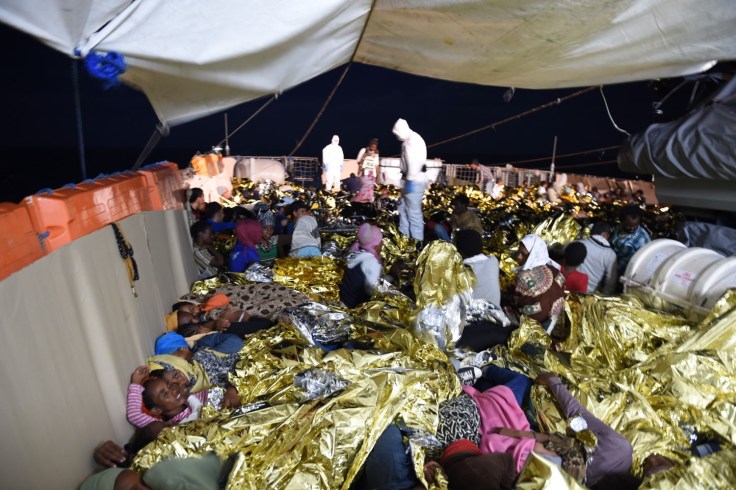
Merciful Sleep.
Nameless and blameless,
drownings not painless,
Saint, sinner, soldier and thief,
weeping child for their mother,
father lost brother,
Muslim, Christian and Sikh.
Stuck to the cardboard with third-degree burns,
for hours without any relief,
please get him to stop crying,
tell him his sister’s just sleeping,
gently drifting,
as the others are still dying,
in the water just beyond my hand’s reach.
The sounds of the ribs cracking under my hands,
are better than the screams in the dark,
we can’t save them all, despite piles of money,
lie to yourself and say ‘more could have died’,
go to your cabin,
curl up in a ball,
and pray that exhaustion brings relief.
Twins reunited with the grieving father who falls to his knees,
a rare ray of hope in a boat overflowing with dread,
a young pregnant lady with a six-month round belly,
who was drowned when we pulled her in over the side,
the shame and the anguish knowing there’s people,
who would prefer if she had just died.
There was mass on the flight deck with the singing of Coptics,
shattered people proclaiming their beliefs,
the chorus of women swaying in unison,
while the men spoke the words of the book,
when the darkness it came, it all went so quiet,
silence unbroken by the chosen in merciful sleep.
When the boat rolls over faster than you can imagine,
disappearing in the blink of your eye,
ditching all into the sea,
decision time now, which one to save first,
knowing full well you might never be right,
living with that isn’t easy,
when it plays in your head every night.
The cause of this mass migration is desperation,
crippling poverty and war without end,
if you choose to flee please don’t go by the sea,
don’t waste your life onboard one of these rafts,
you’ll die in the ocean forgotten and lonely,
with so many others washed up on a beach.
By Ruairí de Barra.
“These words are not just my own experiences, they are also the stories and memories of my friends and colleagues. The crew of LÉ Eithne, whom I was privileged to be part of, rescued 3,376 people in 63 days in 2015. The Irish Naval Service, since that first mission, has rescued over 18,000 people. These poems are also the stories of the migrants and refugees; in particular, they are written in memory of those poor people who never made it. They lie along the trail of bones in the desert or were lost at sea. I write these words to say that I saw you and that none of us will forget you.”
First published in A New Ulster, Issue No. 62, 1 December 2017. I would like to thank Amos Greig for seeing fit to include my work in the company of some incredibly talented people. I am so pleased that this is my first poetry published in print in Ireland.
You can visit the A New Ulster website here:
https://anuanewulster.wixsite.com/anewulster/recently-in-anu
Or read it online for free on ISSUU here:
Or, if you are so inclined, you can purchase a print copy and help support A New Ulster, which provides such wonderful publications each month, by visiting the address below. The poets and writers in its pages receive no payment for their work, and I am sure it isn’t easy for Amos to produce this monthly magazine; the hours of reading submissions alone must be incredible.



Leave a Reply